
What Luxury Projects Really Demand From Metalwork — Through the Eyes of the Designer and the Owner

A boutique façade, a five-star lobby, a private residence, a museum hall: four different buildings, one shared truth. Metal is the most unforgiving material in a luxury fit-out. It cannot be repainted into forgiveness — every wave, weld and fingerprint is permanent, public and lit.
This article sets out what designers actually specify, what owners actually suffer, and — in one extended three-way conversation — how a factory turns their sentences into a signed sample, a specification and delivered evidence.
Key numbers behind the whole process:
- 4 venues — Retail, hotel, residence and museum, each with a different definition of "good"
- 3 voices — Designer, owner and factory project manager at one table
- 1 sample — The signed coupon that becomes the contract
- 5 gates — Where a requirement is written, tested, verified and evidenced
1. Four Venues, Four Definitions of "Good"
The word "quality" is too vague to build from. Each venue type punishes a different failure. Before a single sheet is ordered, the question worth answering is: what exactly will this metal be judged by, five years from now, by the person who has to live with it?
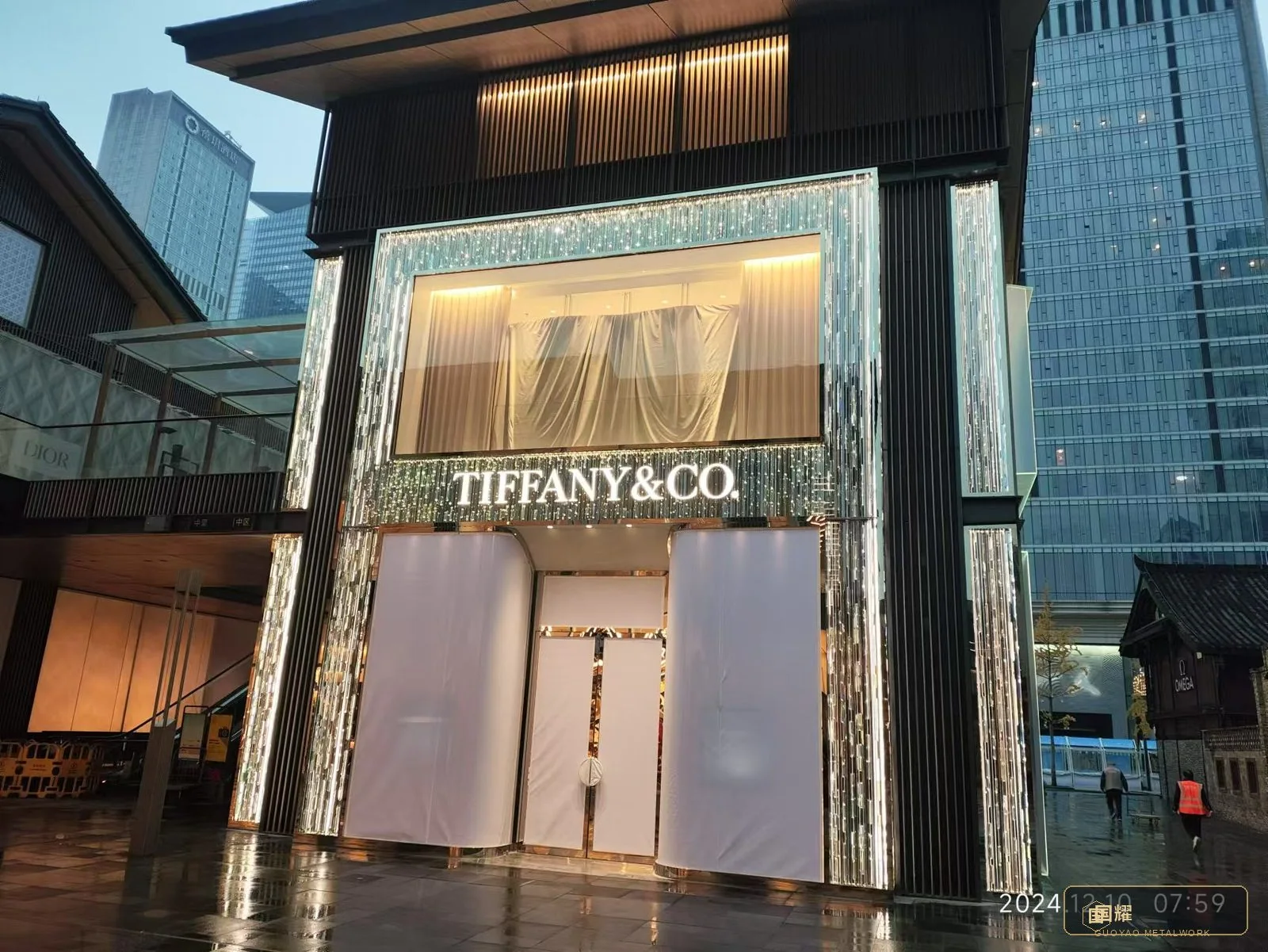
Luxury Retail — The Façade Is the Brand
In a flagship store, the metalwork is the logo. Customers stand one metre away, photograph it, and compare it with the store next door. The metal is judged at eye level, at night, under LED — the harshest lighting that exists.
- Reflection integrity — no ripples in the grain, ever
- Batch-to-batch colour identity across the whole façade
- Backlit letters and fascia: perfectly even glow, zero visible hotspots
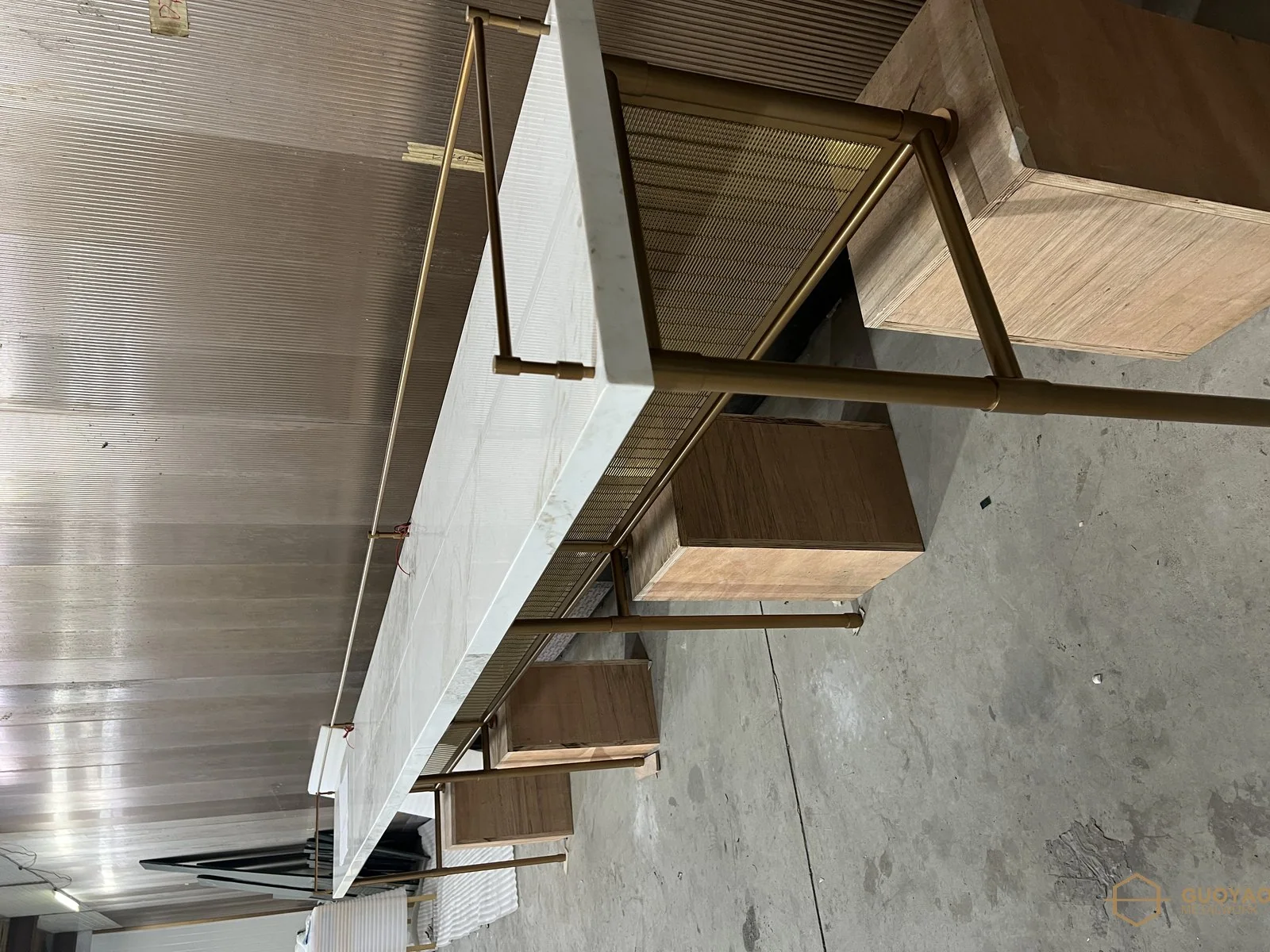
Five-Star Hotels — Scale Meets Service
A hotel runs 24/7. Counters are wiped dozens of times a day; luggage trolleys find every corner. The metalwork must survive contact while looking untouched — and any repair means closing part of the lobby.
- Wear surfaces: anti-fingerprint finish, scratch-tolerant grain
- Large continuous runs: colour held across dozens of panels
- Serviceable details: replaceable kick plates, no dead-end assemblies
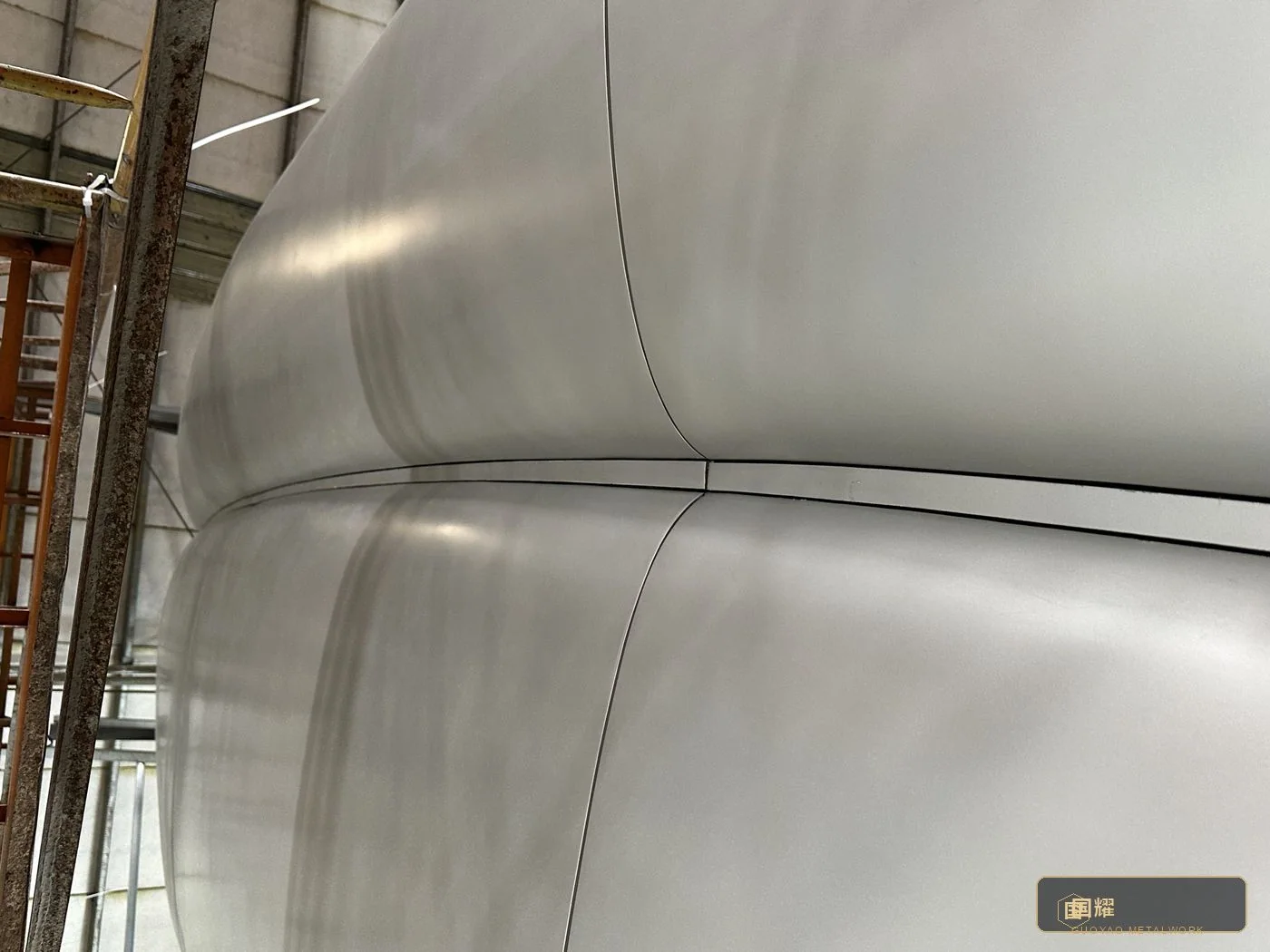
Premium Residences — Touch Is Everything
Owners live one metre from the metalwork every day. What betrays poor work here is intimate: a seam you can feel with a fingertip, a handrail that hums, a panel that ticks as the building warms and cools.
- Flush, silent joints — no rattles, no creaks, no shadow drift
- Tactile finishes that stay pleasant to the hand
- Zero maintenance expectation for years, not months
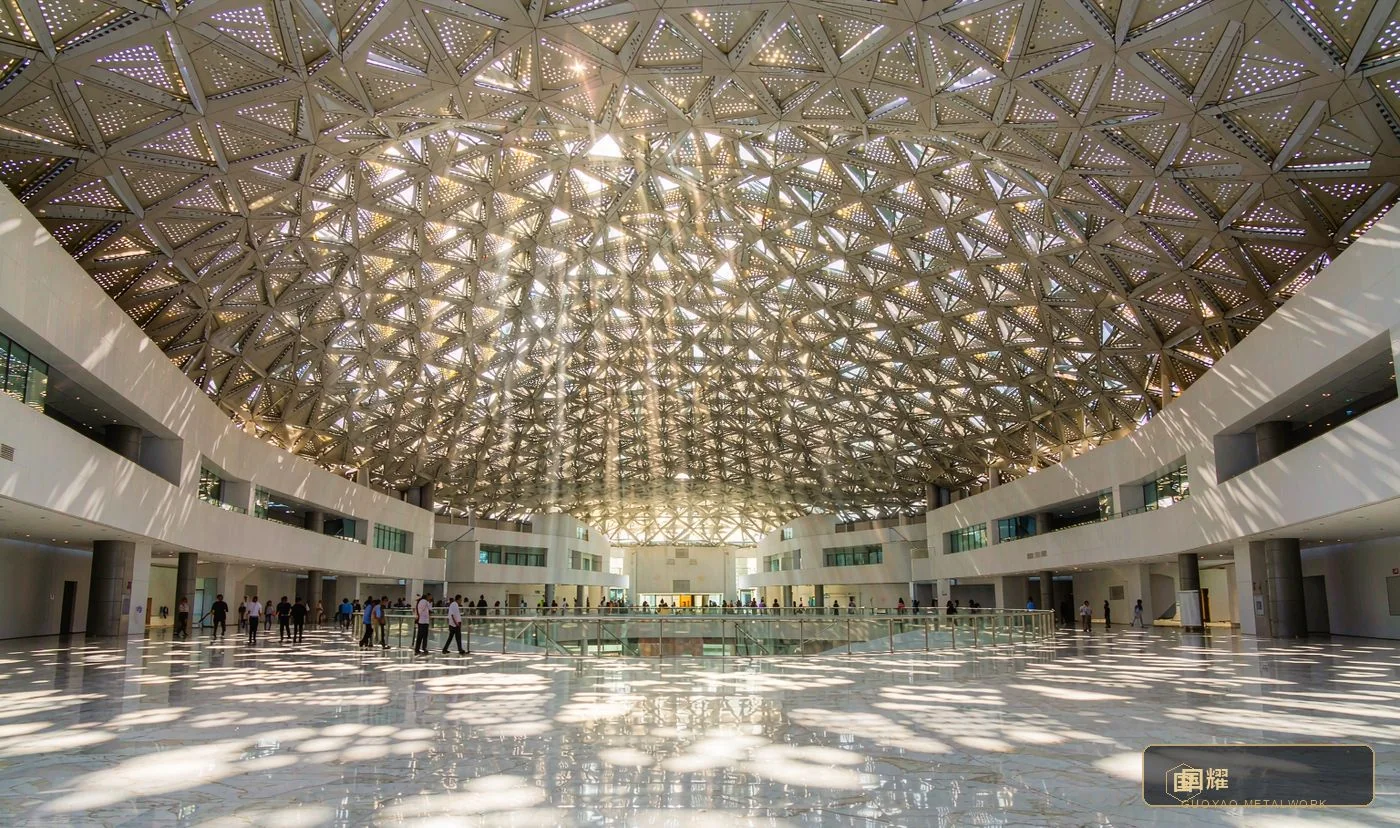
Museums and Cultural — Accuracy as Art
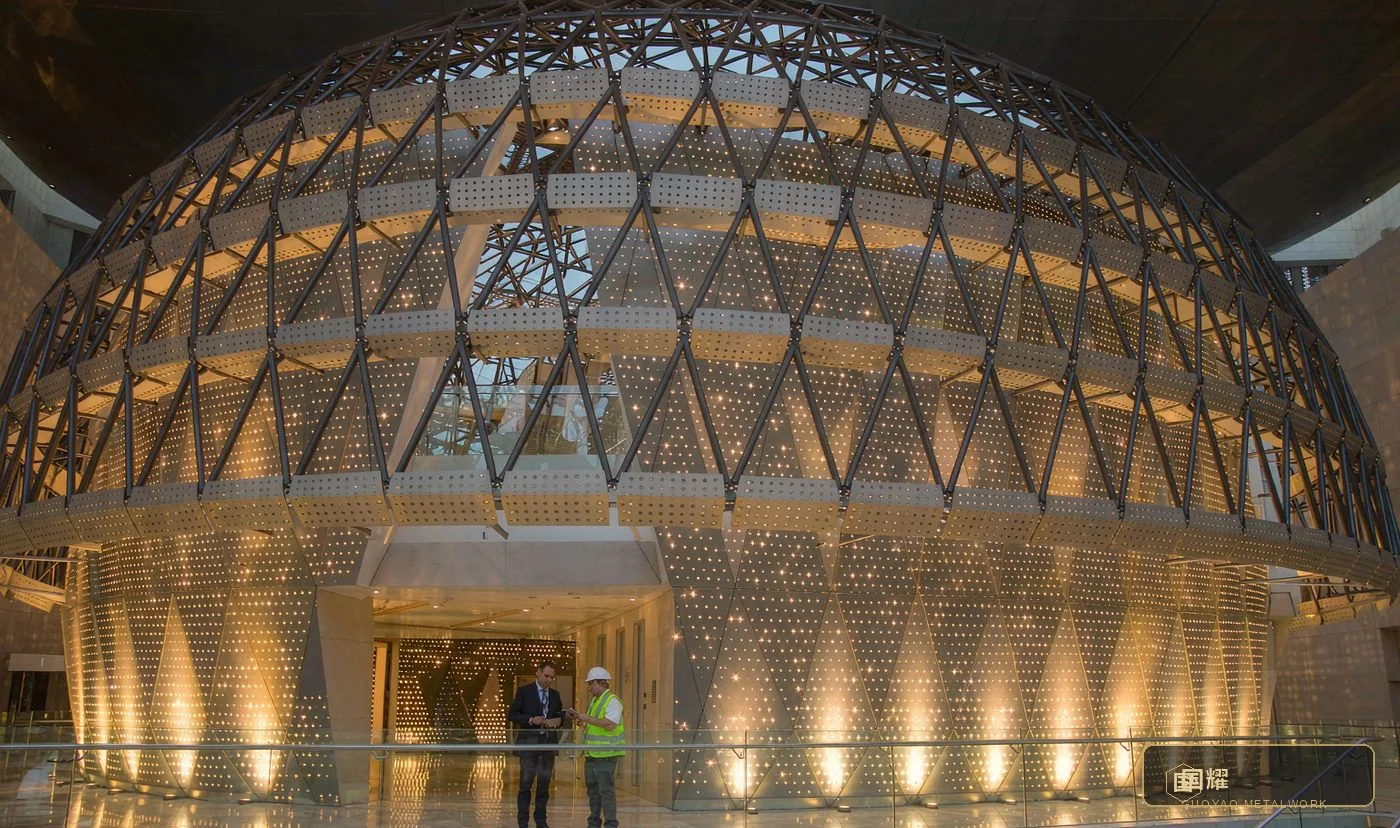
In a museum, geometry is the exhibit. Tolerances that a shopfit would forgive — 3, 4, 5 millimetres — become visible errors on a 30-metre span. The work must also serve the art: controlled reflection, no glare, decades of stability.
- Survey-grade dimensional accuracy on every unit
- Reflection management: the metal serves the artwork, not itself
- 50-year materials: certified alloys, marine-grade fasteners
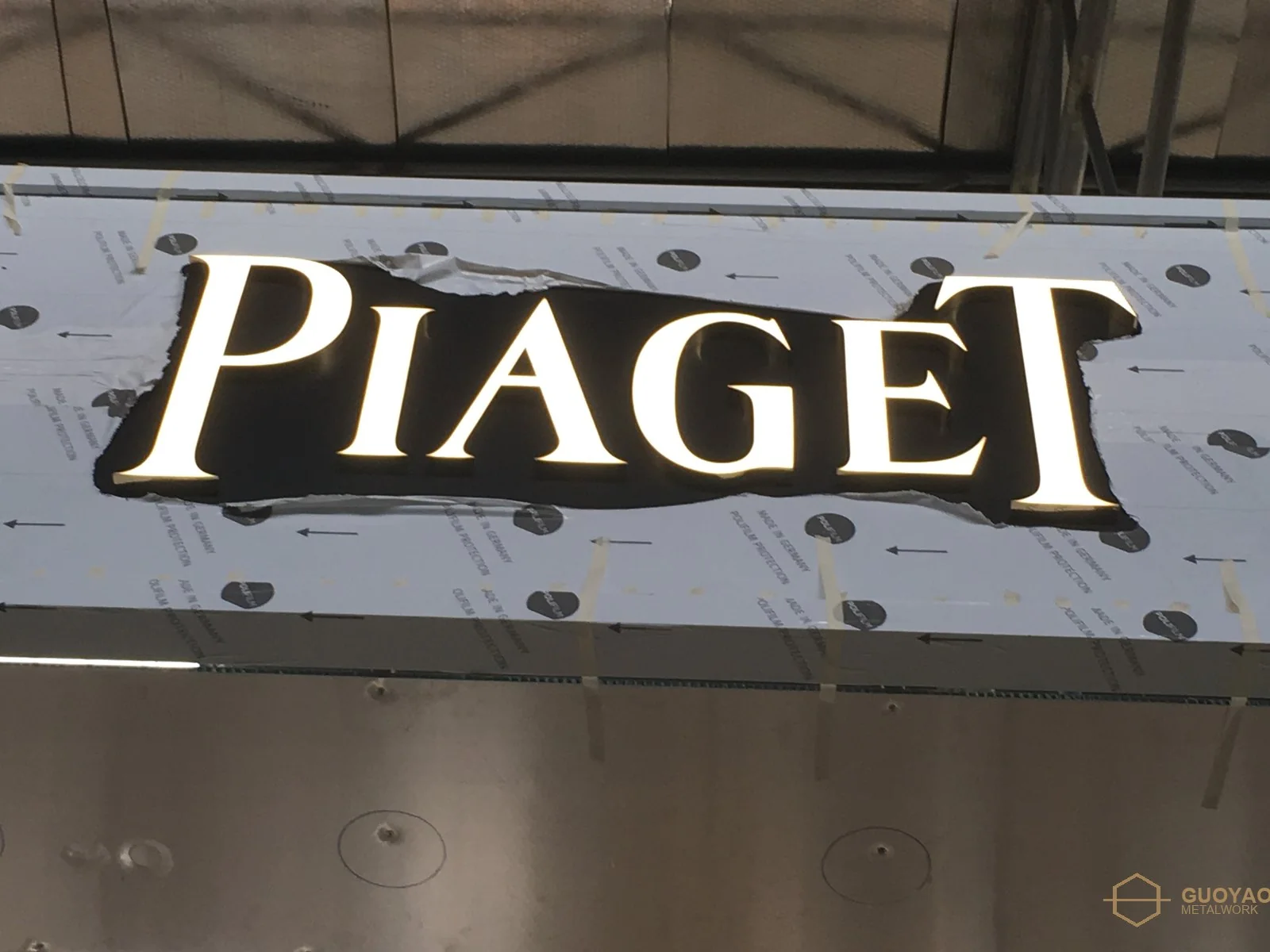
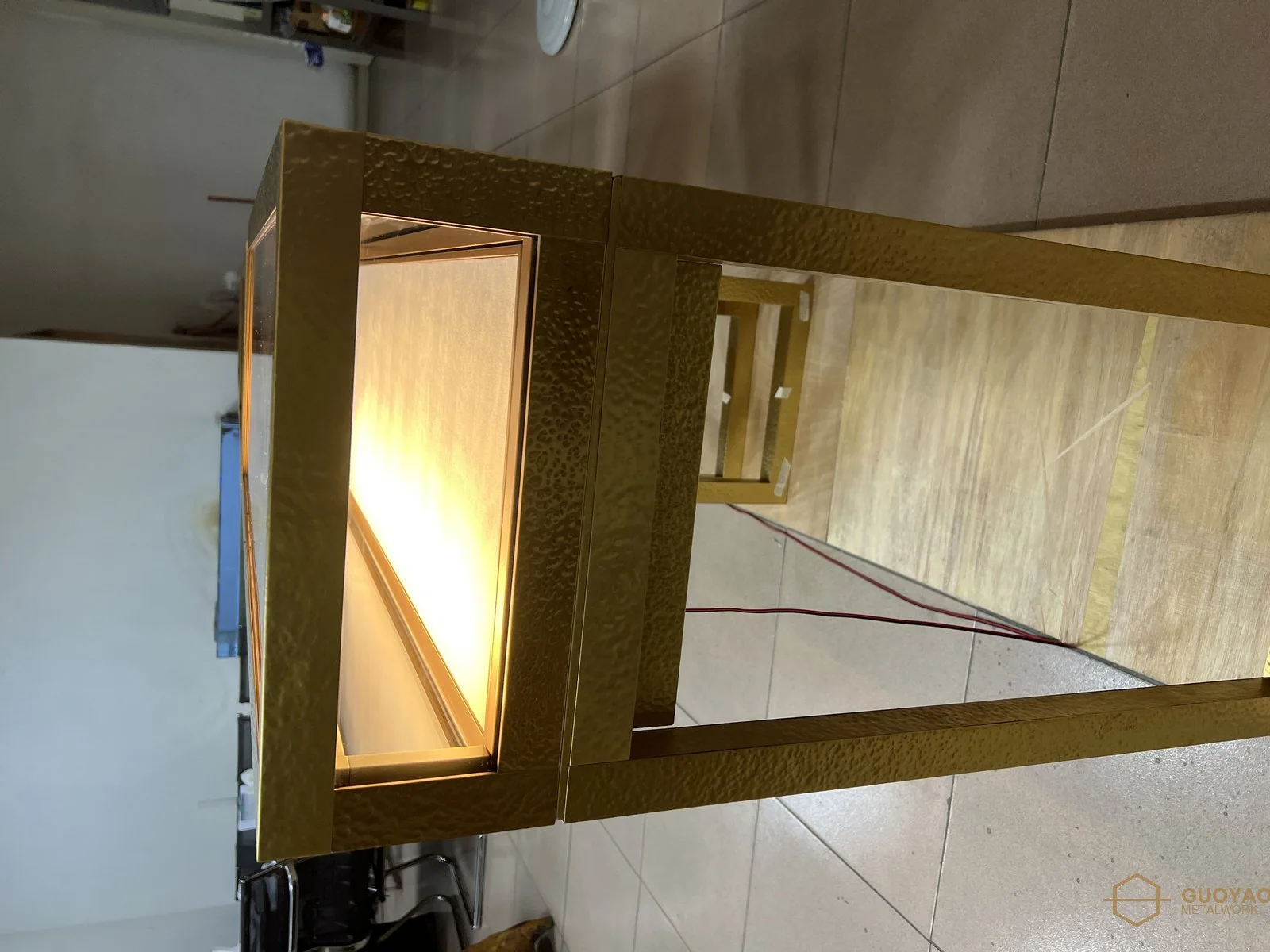
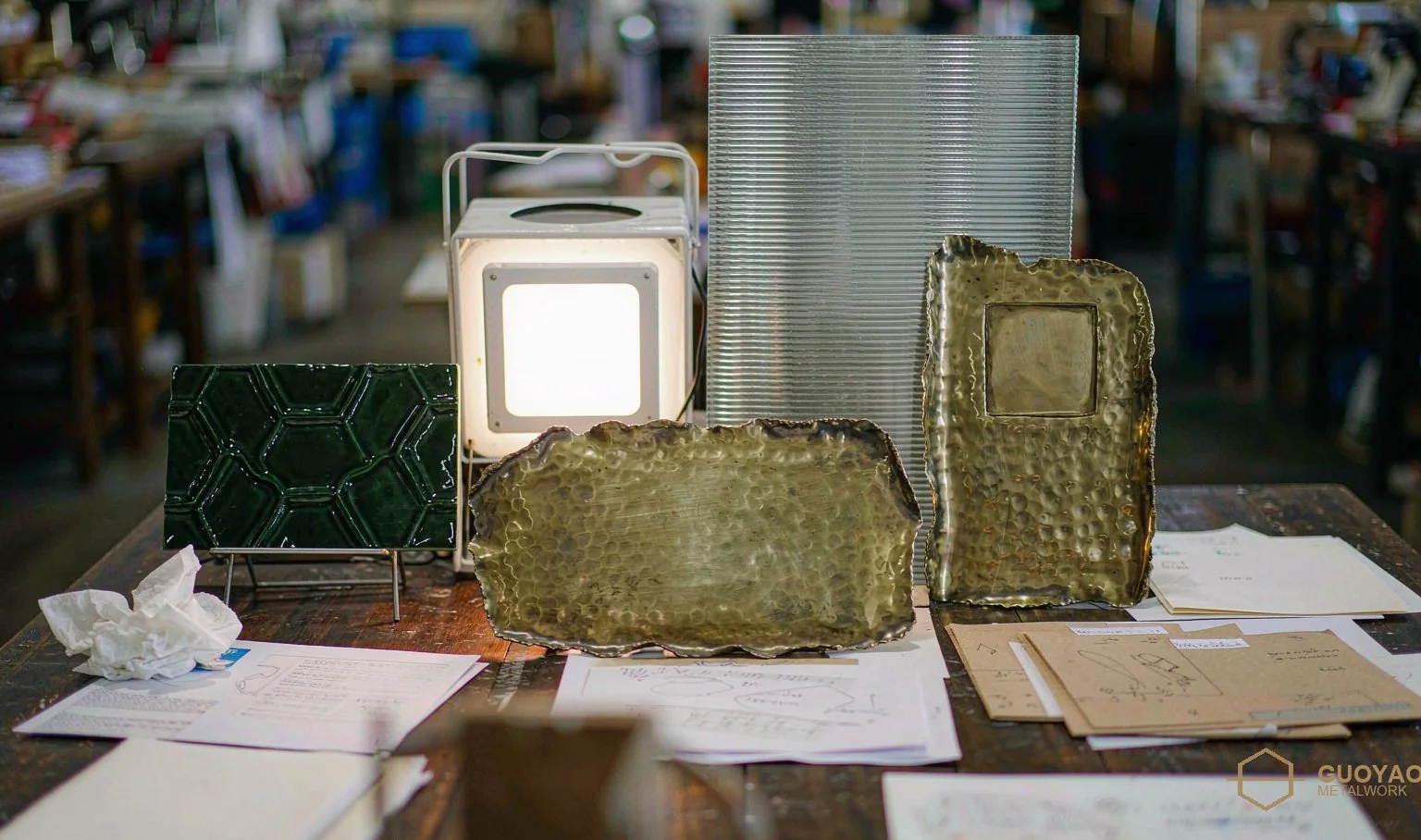
Two details from our own case files show what this means in practice. On a boutique portal, lettering and fascia are judged at one metre, where evenness is the entire specification. In a hotel lobby, a hammered brass vitrine is both a tactile object and a backlit surface that must survive daily wiping.
2. What the Designer Is Actually Specifying
Designers rarely ask for "good metalwork". They describe effects — a surface that disappears, a line that stays sharp, a glow that reads as one lamp — and expect the factory to hear the geometry hiding inside the poetry. The eight requirements below are the ones that decide whether a design survives fabrication.

I can accept a 5% premium. I cannot accept a wavy reflection — it photographs, and photography is how our work gets judged. What I need from a metal factory is not enthusiasm, it is translation: turn my intent into numbers, prove the numbers on a sample, and keep the proof until handover. — Mr. Wang, interior designer, 20 years in luxury fit-out
- The sample is the contract — Not a render, not a PDF. A physical, signed coupon that locks grain direction, gloss, colour and edge treatment — the reference every later batch is judged against.
- Reflection integrity — Flatness within ±0.8 mm over 2 m so a linear light source rolls across the surface without breaking. Verified with a light-line photo, not adjectives.
- Joint discipline — Joints are designed, not found. Shadow reveals of 3 mm stay 3 mm along the whole run; aligned seams read as intentional lines.
- Batch identity — Colour difference ΔE ≤ 1.0 between panels, checked against the master coupon in a light box — because a façade graded light-to-dark across its width is instantly "cheap".
- Nodes and terminations — Corners, returns and reveals are where renders lie. The factory that details these on shop drawings before cutting is the factory that protects the design.
- Interface with other trades — Stone reveals, glass channels, LED coves: metal never stands alone. As-built site survey before fabrication beats any tolerance assumption on a drawing.
- Maintainability by design — Replaceable wear parts, accessible fixings, finishes the cleaning team can actually maintain. A design that cannot be cleaned will not stay a design for long.
- Protection to handover — Protective film staying on until final commissioning, foam-edged crates, numbered units — because a scratched panel in month five is a design failure, not a site accident.
3. What the Owner Actually Lives With
The owner never reads the specification. They experience its consequences — usually in the first ninety days, when the fit-out team has left and the daily operation begins. Six complaints account for almost every metalwork dispute we have seen across our case projects.
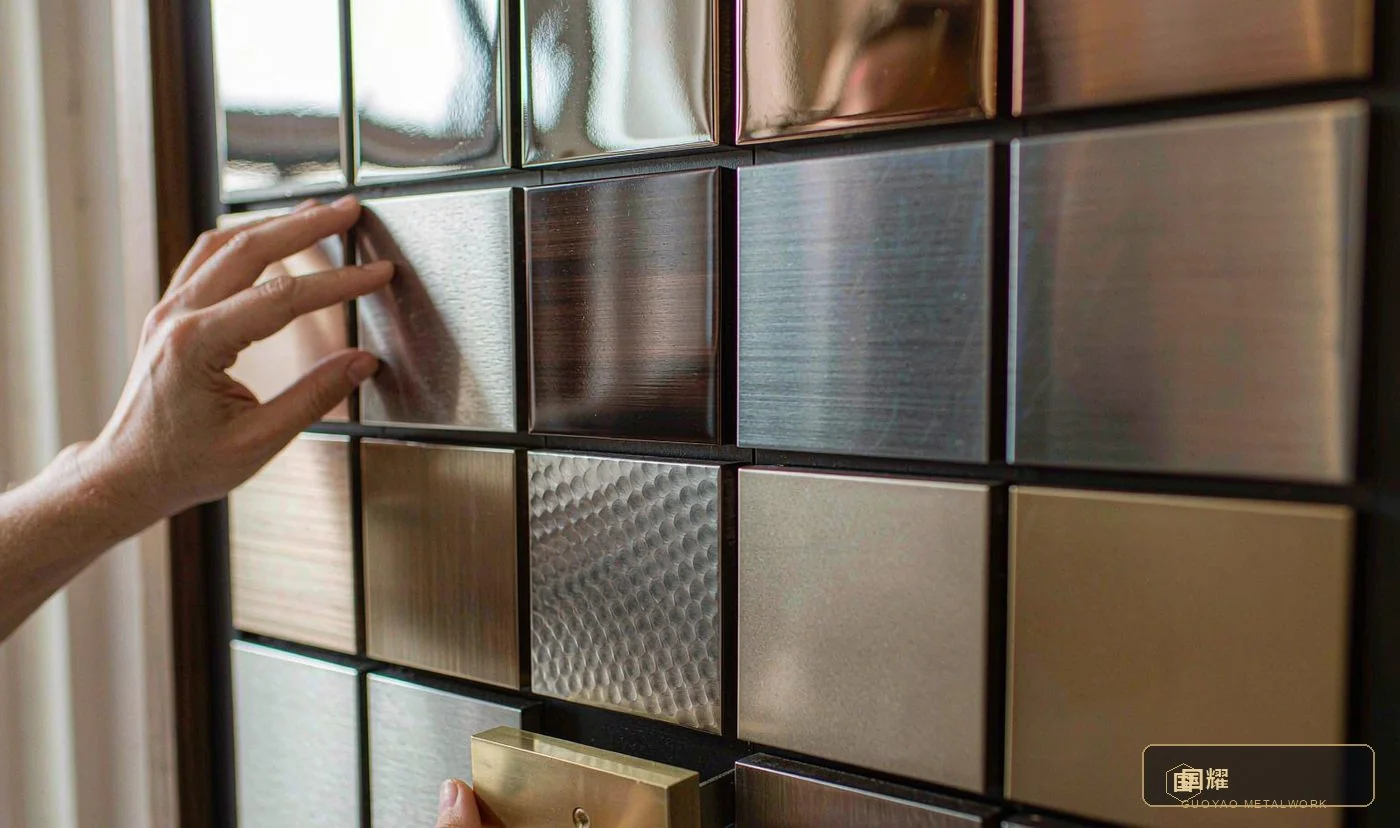
- "It shows every fingerprint." Bare brushed finishes near door handles and counters become grey smudge maps within a week. The fix is specified, not hoped for: anti-fingerprint clear coats, verified by wipe testing.
- "The reflection wobbles." A panel can be "flat" by tolerance and still wave in the light. Owners notice what lighting makes obvious — which is why flatness must be tested the way the space will light it.
- "The seam is loose." A rattling fascia above a doorway is reported by every guest who waits under it. Joints need shims, and pre-assembly in the factory to prove the fit before the site sees them.
- "It looks cheap at night." LED reveals magnify everything: uneven glow, hotspots, colour drift along a run. Night appearance must be commissioned at night, with photos, not assumed at noon.
- "Cleaning is ruining it." Wrong agents and abrasive cloths put a permanent haze into brushed grain in months. Owners need a finish matched to their actual cleaning regime — and a care card in the crate.
- "It aged faster than the lease." Rust bleeding from a weld seam, tea-staining near the coast, peeling coating — all bought years earlier as small savings. Life-cycle cost, not unit price, is the owner's real currency.
4. Where Design Intent Meets Operating Reality
Most metalwork disputes are not quality disputes. They are translation failures — a design intent stated in adjectives, an operating need stated in complaints, and nobody who converts both into one testable sentence. These are the six recurring collisions and the specification that serves both sides.
- "One continuous surface" versus "nothing may rattle or drift" — Factory-built units with 3 mm designed shadow reveals; shimmed, non-rattling joints proven by pre-assembly.
- "Silk-smooth reflection" versus "guests photograph everything" — ±0.8 mm over 2 m flatness plus a light-line photo test under the venue's own lighting angle.
- "Warm, alive patina" versus "cleaning twice a day, forever" — A PVD or coated finish chosen for the actual cleaning regime, with a 500-wipe gloss-retention report.
- "Glow like a single lamp" versus "no call-outs at midnight" — Integrated LED with ±10% evenness, commissioned and photographed at night before handover.
- "Timeless material" versus "coastal air, sun, four seasons" — Certified 316/316L or PVDF systems, 1000-hour salt-spray reports, marine-grade fixings.
- "Fits the drawing" versus "the site never matches the drawing" — An as-built survey of ±2 mm before cutting; units cut to site dimensions, not to CAD hope.

The collision gets resolved physically: a 1:1 mock-up under a raking lamp, with all three parties present. Every later dispute is settled by pointing at this panel.
5. The Dialogue: How a Sentence Becomes a Specification
The following conversation is a composite of dozens of real project kick-offs across our boutique, hotel, residence and museum work. Three people: Mr. Wang, the interior designer; Ms. Chen, the owner's development director; Engineer Li, the factory's project manager. Watch how each requirement gains a number, a test and an owner.
Act I — The Brief
The kick-off meeting in the design office: drawings and coupons on the table.
Mr. Wang (Designer): "The reception wall has to disappear at night and come alive at dawn. One continuous brushed surface, no visible joints above 2.1 metres, and the reflection must not wobble when guests walk past. That reflection is the design — I would rather change the stone than compromise it."
Ms. Chen (Owner): "It sounds beautiful, but I run this lobby. If a housekeeper scratches it in month two, or the surface reads every fingerprint, I receive complaints — not compliments. And I will be honest: your quotation is about 30% above the other two. What am I paying for?"
Engineer Li (Factory): "Both of you are describing the same panel. Before we talk about price, let me do my job: write down what your sentences mean in numbers, what we will each check, and what evidence you hold at the end. Then the price either makes sense or it doesn't."
Two adjectives — "continuous" and "alive" — were accepted as legitimate engineering requirements, and a third party was appointed to translate them. Nobody has discussed tolerance yet; both sides have only agreed that the intent is negotiable in how, never in whether.
Act II — The Translation
The same table, one week later: shop drawings, a steel rule and a light box.
Engineer Li (Factory): "'One continuous surface above 2.1 metres' — I will build the wall as four factory units, joined by a 3-millimetre shadow reveal. The joint exists, but the eye reads continuity. 'Reflection must not wobble' becomes flatness within 0.8 millimetres over two metres, verified two ways: a straightedge with feeler gauges, and a light-line test — we roll a linear LED across the panel and photograph the line. The photo goes into your approval set."
Mr. Wang (Designer): "Good. But I want the grain vertical on the wall and horizontal on the counter, and I want the third unit to look identical to the first — façades graded light-to-dark look like a discount store. How do you promise that?"
Engineer Li (Factory): "Two mechanisms. First, a signed master coupon: grain, gloss units, colour — once you initial it, it becomes the standard, and it stays in our light box for the whole production run. Second, every batch is measured against it with a spectrophotometer. If ΔE exceeds 1.0, the batch does not ship. That number goes in the contract."
Ms. Chen (Owner): "And my fingerprints? My team wipes those counters down twice a day. In the last project the surface went hazy in four months."
Engineer Li (Factory): "Then we change the final coat, not the look — an anti-fingerprint treatment over the same brushed finish. And we test it the way you will use it: 500 wipe cycles with a neutral cleaner, then measure gloss retention. You get that report with the crates, and a care card your housekeeping team can actually follow. That is part of what the 30% buys: the surface is guaranteed as an operating asset, not delivered as a hope."
Every sentence now has a number — 3 mm reveal, ±0.8 mm flatness, ΔE ≤ 1.0, 500 wipes — a test method, and a document that will exist after installation. The premium stopped being an opinion and became a line-item list of verifiable promises.
Act III — The Lock-In
The factory assembly hall: the 1:1 mock-up under a raking inspection lamp.
Mr. Wang (Designer): "The mock-up corner is right. The reveal holds its 3 millimetres the whole way, and the light line doesn't break. One problem — our surveyor just found a 20-millimetre camber in the slab at the column. The drawing does not match the building."
Engineer Li (Factory): "Expected — sites never match drawings. That is why our sequence is survey first, cut second. I will send the crew with a total station, capture as-built dimensions, and every unit is cut to the site, not to the CAD file. The mock-up stays standing here until the site is verified. Nobody loses money on a refit because we assumed."
Ms. Chen (Owner): "So let me confirm what I am signing. Not a picture — a physical panel I can touch, with a light-line photograph, a colour report, a wipe test and a survey behind it. And this exact panel ships inside the first crate as the site reference?"
Engineer Li (Factory): "Exactly. The sample is the contract. The report is the receipt. If anything on site ever looks wrong, we put the signed coupon and the production batch under the same light box — and the argument ends in minutes instead of months."
Mr. Wang (Designer): "Then I can draw the rest of the building with confidence. Send me the mock-up photos — I want them in my handover set too."
The mock-up converted three opinions into one shared physical reference. Risk moved to the party best able to hold it: the factory surveys before cutting; the designer signs a surface, not a render; the owner receives evidence, not assurances.
What Changed Across the Table
- "No visible joints" became four factory-built units with a 3 mm ±0.5 designed shadow reveal above 2.1 m — verified by mock-up photos and a joint survey on the pre-assembly rig.
- "Reflection must not wobble" became flatness ≤ 0.8 mm over 2 m with a grain direction map — verified by straightedge and feeler gauge plus a light-line photo set.
- "Units must look identical" became a signed master coupon with ΔE ≤ 1.0 between batches — verified by spectrophotometer against the master in a light box, per batch.
- "Cleaned twice a day" became an anti-fingerprint clear coat with 500-wipe durability — verified by a gloss-retention of 95% or better, reported in the crate.
- "Site may not match drawing" became an as-built survey of ±2 mm before any cutting — verified by a survey report that locks the cutting list.
- "Complaints, not compliments" became night commissioning with the LED scene at full — verified by evenness photos at ±10%, taken at night before handover.
6. The Matrix We Sign Against
Luxury metalwork is bought twice: once as a specification, once as proof. This is the standing matrix we use across boutique, hotel, residence and museum packages — every requirement paired with its test and the physical evidence delivered at handover.
- Visual continuity — ±0.8 mm flatness per 2 m and a grain direction map · tested by straightedge plus light-line photography · evidence: a signed light-line photo set.
- Colour and gloss identity — ΔE ≤ 1.0 and gloss within ±3 GU of the master · tested by spectrophotometer against the signed coupon · evidence: a per-batch colour report.
- Joint discipline — 3 mm ±0.5 reveals, shimmed and rattle-free · tested by feeler gauge and shake check on the rig · evidence: factory pre-assembly photos.
- Night appearance — LED integration with glow evenness of ±10% · tested by photometric mock-up and night commissioning · evidence: a signed night photo set.
- Maintainability — anti-fingerprint or PVD finish · tested by 500-wipe cycles and gloss retention · evidence: lab report plus care card.
- Corrosion resistance — 316/316L or a PVDF system · tested by 1000-hour neutral salt spray · evidence: a third-party test report.
- Interface accuracy — as-built survey of ±2 mm before cutting · tested by total station site survey · evidence: survey report plus cutting list.
- Protection and delivery — VCI film, foam edges, numbered crates, film on until commissioning · tested by a packing audit against checklist · evidence: photo set plus packing list per crate.
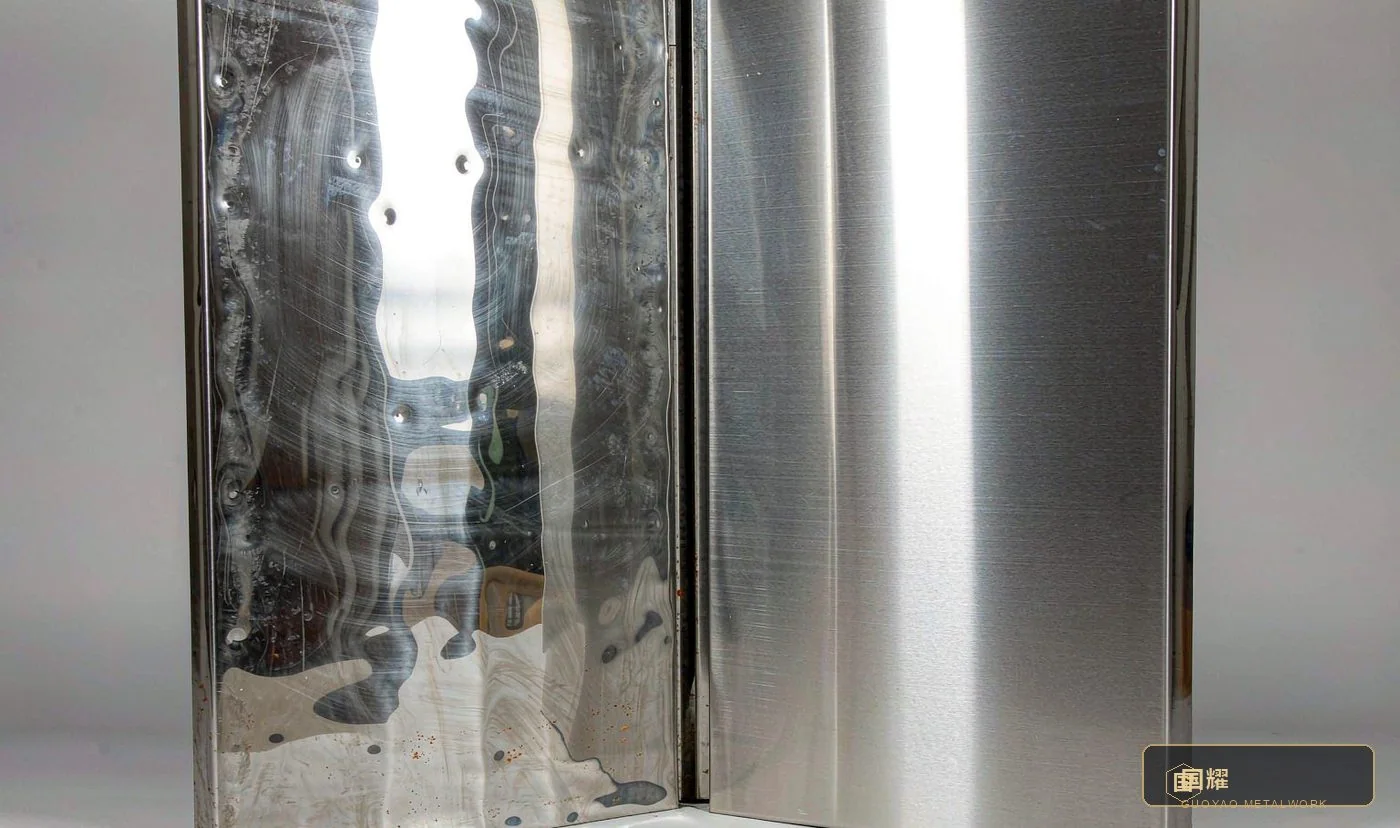
What the light-line test protects you from: the left panel passes "flat by tolerance" and fails every camera and lobby at once.
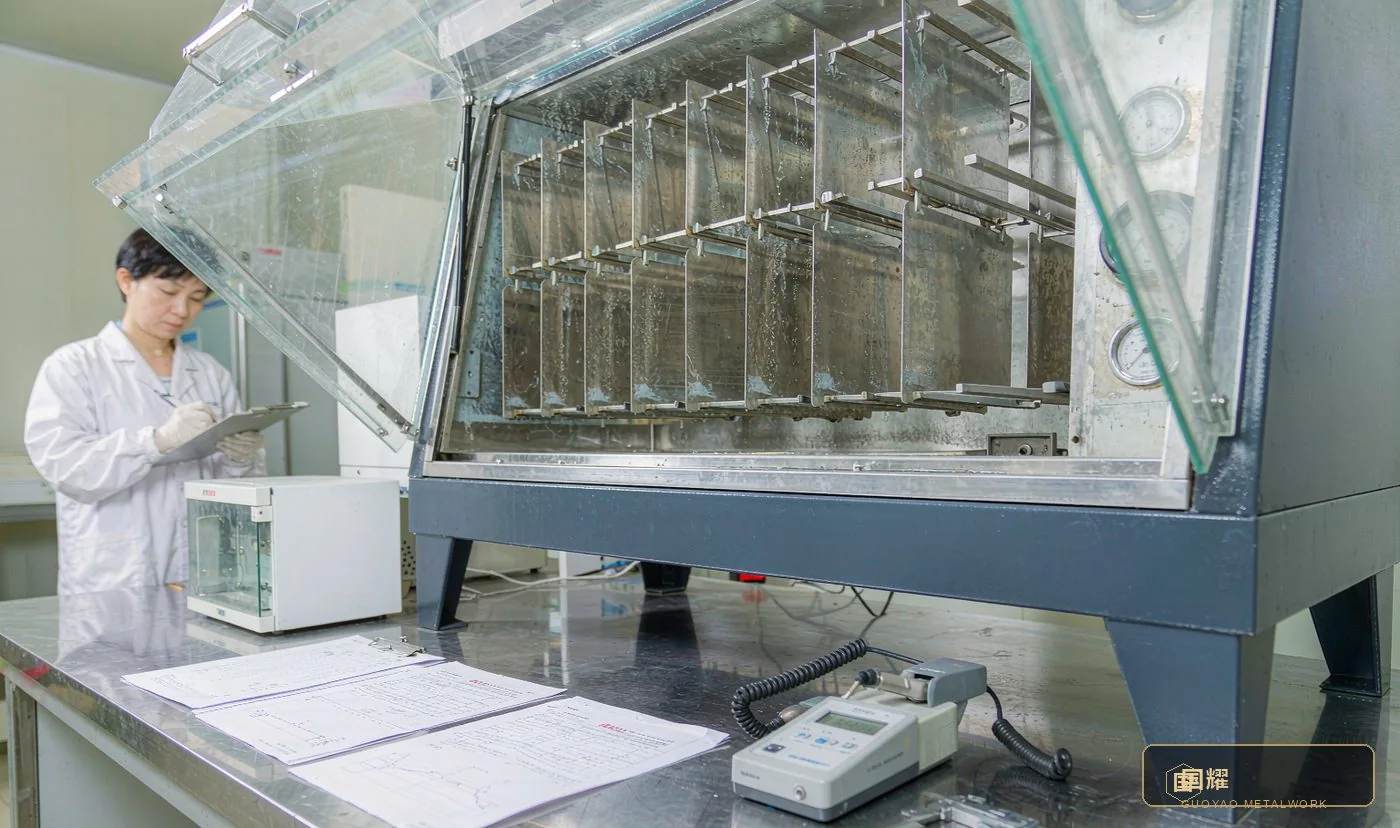
Evidence is manufactured alongside the metal: salt-spray chambers, gloss meters and per-batch reports that travel with the crates.
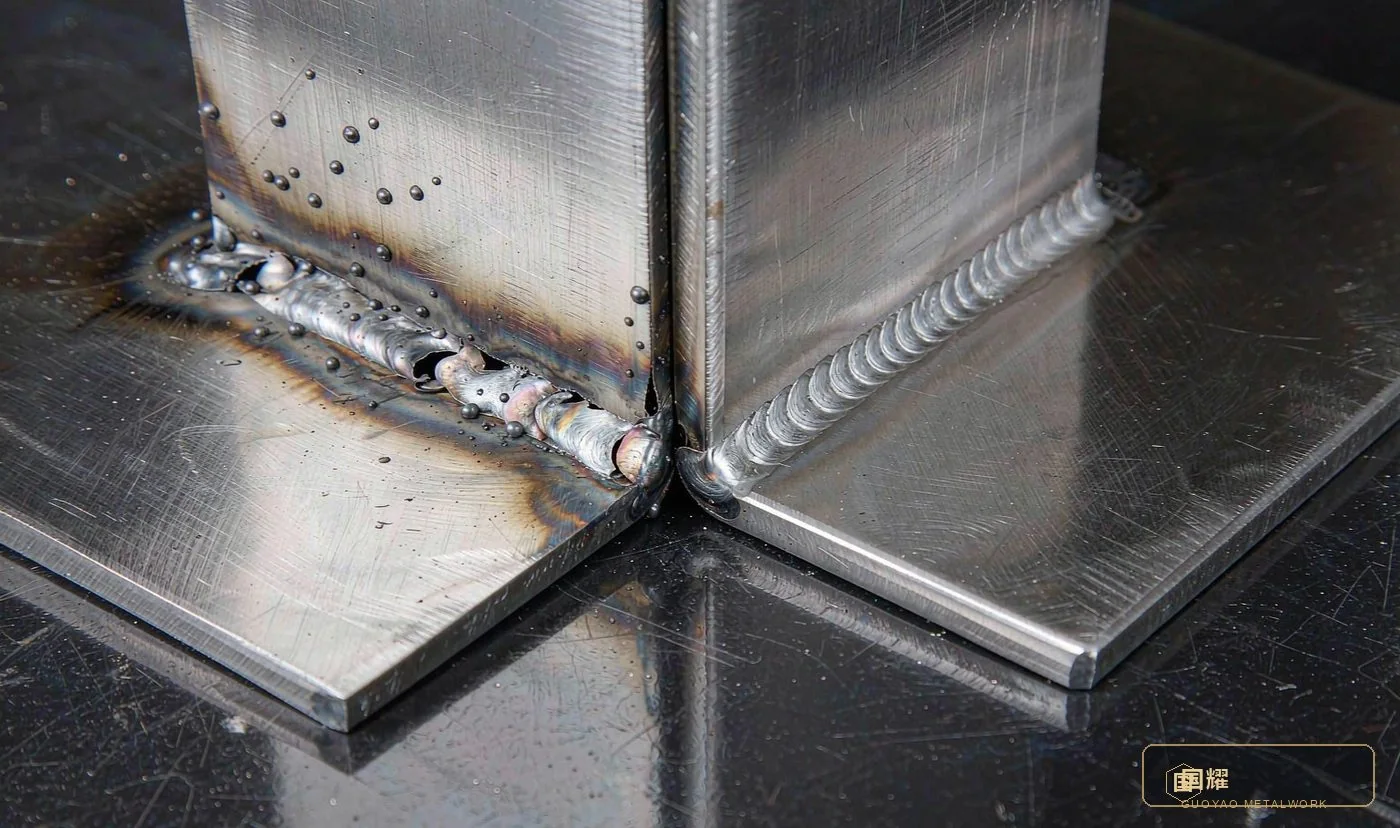
Joint discipline, made visible: the weld on the left is "strong enough" and instantly luxury-destroying; the right one is the only version that belongs in the matrix above.
7. Six Checks per Venue, Learned From Real Handovers
Condensed from our boutique, hotel, residence and museum case projects — the six checks that most often separate a smooth handover from a warranty argument.
Luxury Retail — Judge It Like a Customer
- Photograph the façade at night — the camera reveals what the eye forgives
- Check grain continuity across every panel at one-metre distance
- Confirm backlit letters glow evenly, with no hotspots at the returns
- Verify the master coupon still matches the installed batch
- Test door-handle zones for fingerprint visibility after one week of use
- Hold one spare finished panel per façade zone in the basement store
Five-Star Hotels — Run It Like a Shift
- Wipe-test every counter surface with the hotel's actual cleaning agents
- Push a loaded trolley past every corner — inspect the corners after
- Listen for rattles at doorways and fascia under HVAC on/off cycles
- Confirm replaceable kick plates and serviceable fixings
- Check night lighting evenness during a full evening scene
- Agree the maintenance schedule and products in writing at handover
Premium Residences — Touch It Like an Owner
- Run a fingertip along every joint — no steps, no catching edges
- Close doors near metalwork and listen for hums or ticks
- Check shadow-gap reveals hold their width over long runs
- Verify protective film stays on until final clean, then removed cleanly
- Confirm handrail and touch surfaces feel right morning and evening
- Keep the care card where housekeeping will actually see it
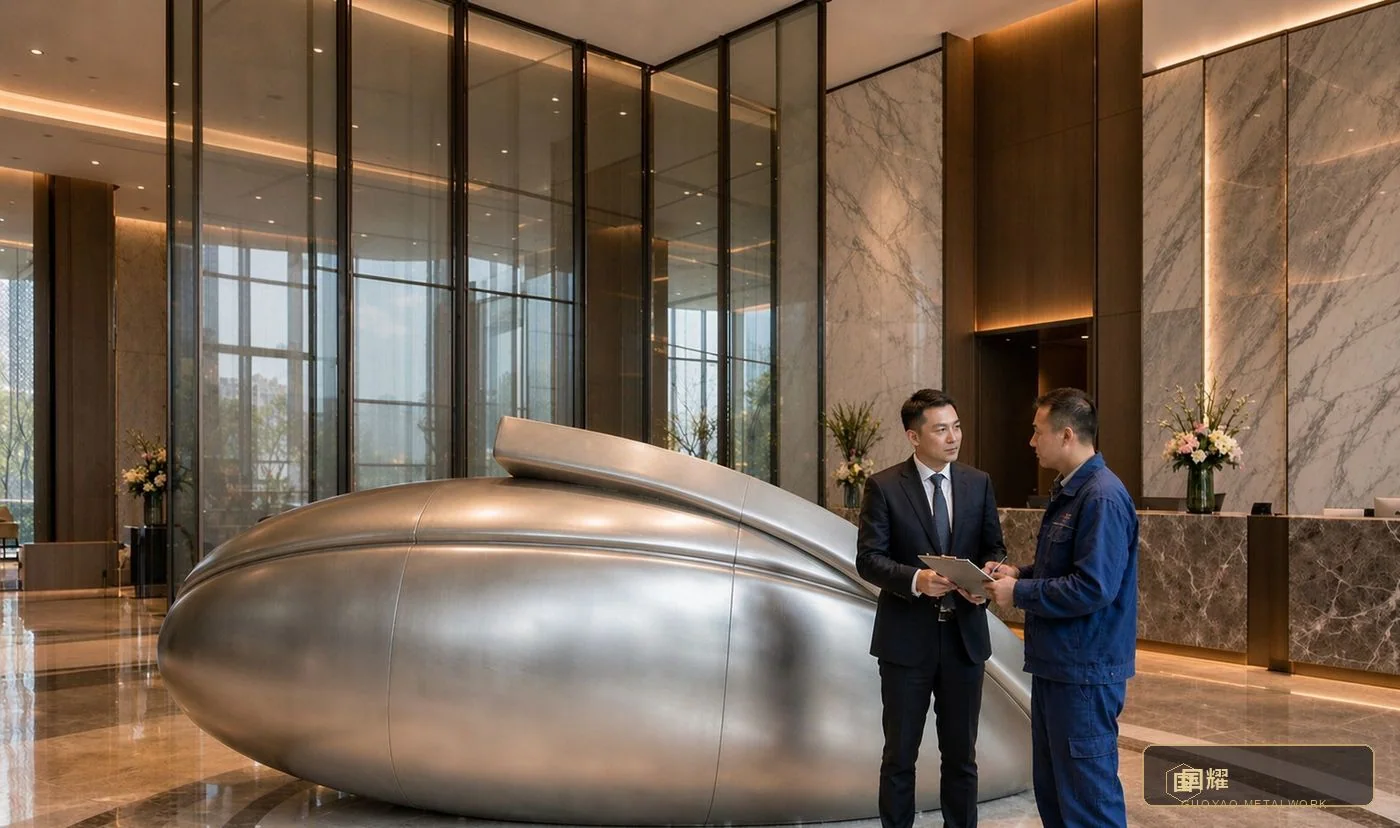
Museums and Cultural — Measure It Like an Exhibit
- Review the dimensional report against the survey, unit by unit
- Walk the space at all lighting scenes — metal must serve the art
- Verify reflectivity near artworks against the conservation brief
- Confirm alloy and fastener certificates match the 50-year spec
- Inspect every weld finish under raking light before close-up
- Archive the full evidence set with the building's conservation file
8. Luxury Is a Specification, Not a Vibe
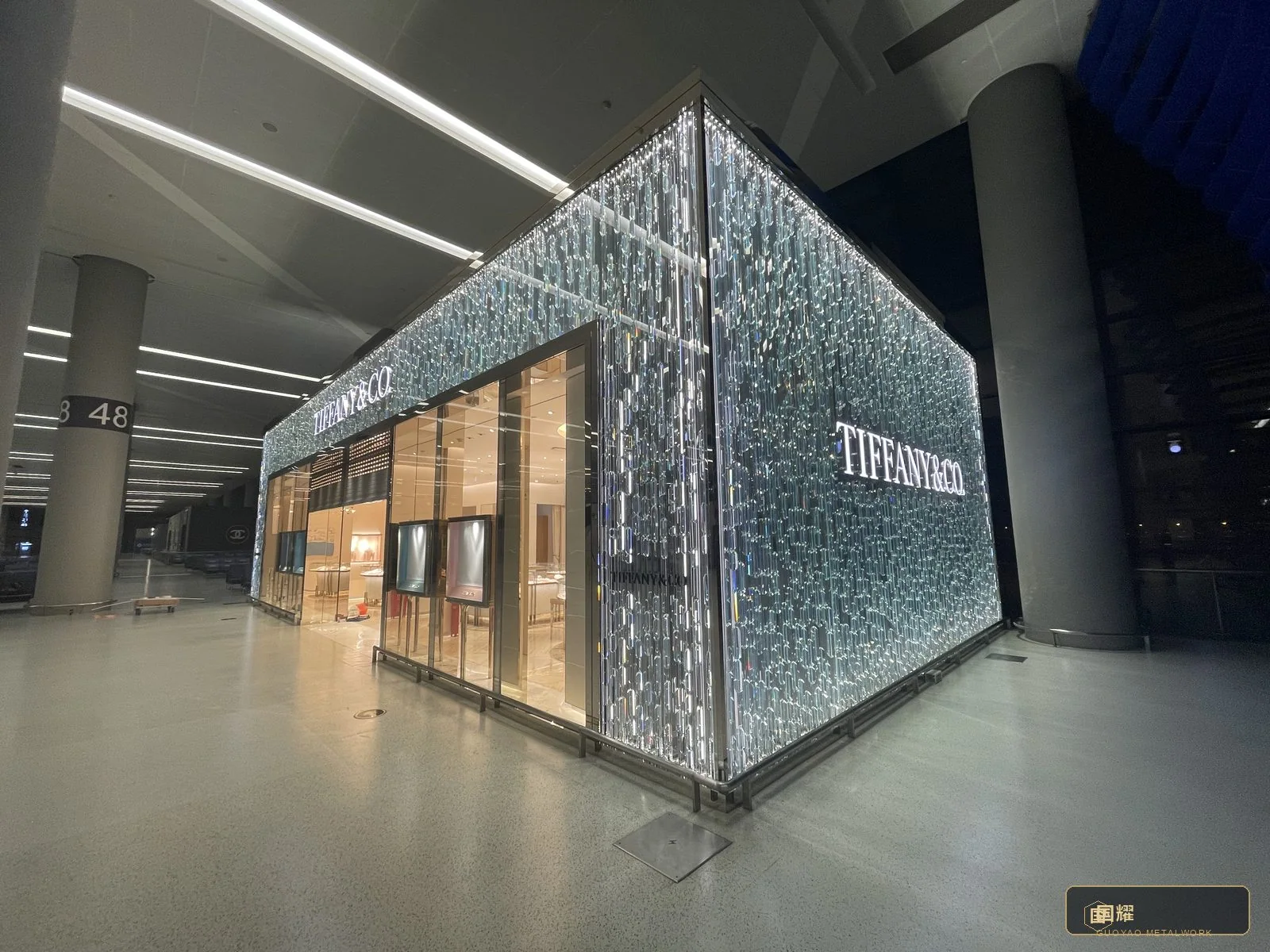
Across Tiffany-class boutiques, five-star lobbies, private residences and museum halls, the pattern repeats: the projects that feel effortless are the ones where somebody translated feelings into numbers early — and proved each number on a physical sample before cutting production metal. Designers keep their intent. Owners keep their operations. Factories keep their promises. The signed sample is where those three contracts meet.
If you are preparing a boutique, hotel, residence or museum package, send us the intent in your own words — adjectives welcome. We will return the translation: numbers, mock-ups, tests and evidence, the way it happened at this table.